Solve the Case Family & Date Night
Turn the portable escape suitcase into a week of mysteries—or one epic marathon.
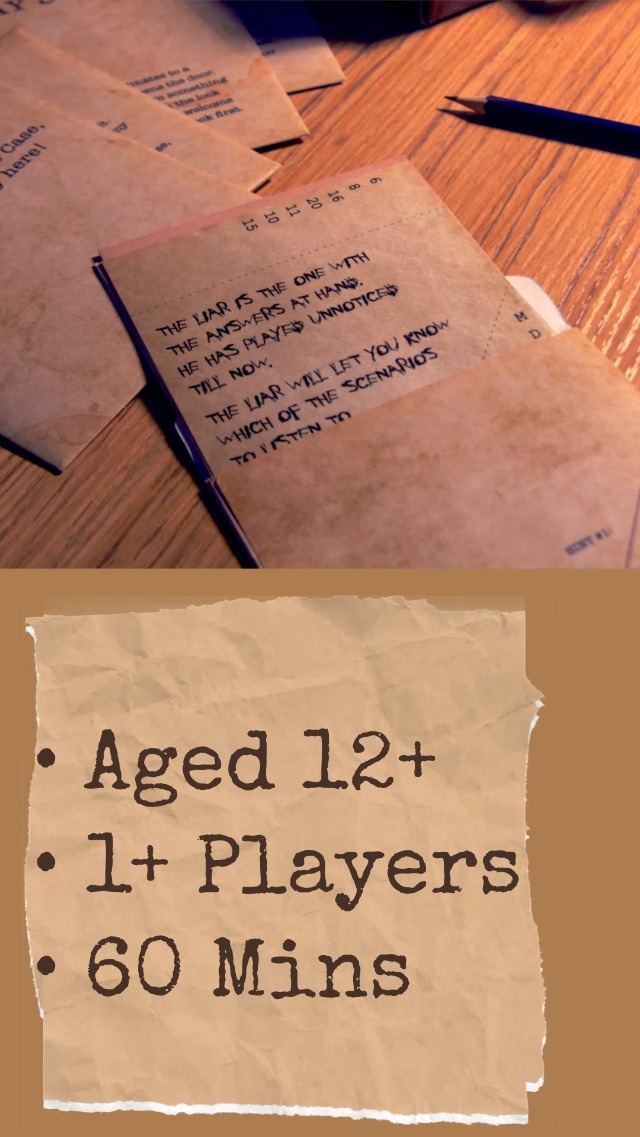
Fizz Creations markets Solve the Case for family game nights, date nights, and small team challenges, and that framing fits the product perfectly. You get five sequential plays in one travel-ready suitcase, each aimed at roughly an hour, for ages 12+ with a flexible 1+ player count. Everyone shares the same physical case on one table—there is no online lobby and no requirement to play alone. This guide shows how to host the campaign as a romantic evening, a household ritual, or a single long session without burning out or spoiling later envelopes.
If you still need the product basics, skim Getting Started and the Players Hub first. Difficulty expectations for each envelope sit on the Difficulty Tier List. Keep Tips and Hints bookmarked for soft help mid-date.
Why the suitcase works socially
Escape rooms create a shared “we figured it out” moment. Solve the Case shrinks that feeling into cardboard you can store on a shelf. Couples get a structured activity that is more interactive than a movie and less abstract than a heavy eurogame. Families get a story about a mysterious lost case that unfolds across multiple sittings. Because plays are sealed in numbered envelopes, you can stop cleanly after one success and still feel closure.
Social strengths:
- Clear time box (~60 minutes) per play.
- Built-in cliffhangers between envelopes.
- Roles for talkers and quiet thinkers alike.
- Portable enough for a cabin weekend or a friend’s apartment.
Watch-outs:
- Play 4’s coin-oriented step frustrates many groups—plan extra patience or a hint policy in advance.
- Scratch areas and stickers are one-way; treat the case gently.
- Phones on the table invite accidental walkthrough spoilers.
Format A — five evenings (recommended for couples and families)
Spread the campaign across a week or five consecutive weekends.
Evening structure (about 75–90 minutes door to door):
- Reset the space — clear the table, good lighting, drinks ready, phones face-down unless used as a timer.
- Recap — thirty seconds on what you learned last time; retrieve prior envelopes because later plays need them.
- Open only the next numbered play — resist “just peeking” at Play 5’s packet.
- Run the timer — official guidance is a sixty-minute clock; pause only if your house rules allow breaks.
- Debrief — celebrate the final answer, reseal leftover bits neatly, jot one favorite moment in a shared note.
Suggested calendar:
| Night | Play | Hosting note |
|---|---|---|
| 1 | Play 1 | Learn roles; keep mood light |
| 2 | Play 2 | Have scrap paper ready for numbers |
| 3 | Play 3 | Cipher focus; read aloud carefully |
| 4 | Play 4 | Hardest community spike—agree on hint timing |
| 5 | Play 5 | Logic finale; toast the campaign after |
Between nights, store the suitcase closed with finished plays tucked as the instructions describe. Do not “pre-open” tomorrow’s envelope to save time—the surprise is the product.
Date-night extras
- Cook something simple that can wait if you run long on a puzzle.
- Swap who is suitcase lead each evening so both partners get spotlight moments.
- If one person is puzzle-dominant, let the other call the midpoint hint vote.
- Keep spoilers romantic-code: “I have an idea” beats “I already looked it up.”
Family-night extras
- Assign a junior detective to sticker spotting and a senior detective to fragile folds.
- Use a visible kitchen timer so kids feel the escape-room stakes without panic.
- End on a win: if Play 4 is melting down, take an official hint early rather than souring the week.
- After Play 5, invite everyone to retell the story of the case in their own words.
Format B — one long session (marathon Saturday)
Some groups prefer a single afternoon or evening to clear all five plays. Budget five to seven hours including breaks, snacks, and the harder stalls. Marathon rules of thumb:
- Schedule a stretch break after Play 2 and after Play 4.
- Rotate roles every play so fatigue does not trap one person as eternal scribe.
- Keep future envelopes in another room if willpower is low.
- Decide in advance whether failed sixty-minute clocks still allow finishing with hints—most home groups say yes for fun’s sake.
Marathons amplify frustration on Play 4. Read the room: a ten-minute walk can save the finale better than grinding in silence. When you truly need solutions, open the matching walkthrough with spoilers labeled rather than scrolling random videos mid-fight.
Hint and walkthrough etiquette for hosts
Agree on a ladder before Play 1:
- Re-read the current cards slowly as a group.
- Use any in-product hint guidance on the envelope or cards.
- Consult this site’s Tips and Hints for non-spoiler nudges.
- Open the specific play walkthrough (Guides Hub) to a spoiler section only.
- Last resort: official answer sheet sealed in the box.
Hosts should never silently spoil to “move things along” unless the table explicitly asks. The answer-checker role from the Players Hub helps.
Pacing against the difficulty curve
Community reports generally treat Play 1 as the gentlest onboarding and Play 4 as the steepest spike, with Plays 2, 3, and 5 filling the middle-to-hard band. That curve is perfect for a five-night arc: confidence builds early, the fourth night becomes the memorable boss fight, and Play 5 lands as a satisfying logic curtain call. If you only have three evenings free, still play in order—never skip ahead—and simply accept shorter debriefs.
Table checklist before guests arrive
Borrow the fuller inventory from the Tools Hub, then add social items:
- Timer everyone can see
- Pens and two colors of sticky notes
- Coasters / drink zone away from cardboard
- Optional blindfold box or bag for phones if your group likes hardcore spoiler hygiene
- Printed reminder: “Plays are sequential—keep prior envelopes”
After the campaign
Once the pirate-logic finale is done and the suitcase story is complete, resist immediately hunting every leftover secret in a way that rewrites the night’s memories. Save detailed answer comparisons for later if someone wants closure. If friends ask where to buy their own case, point them to Where to Buy & Links. Product history and edition notes live under Updates.
Hosting Solve the Case well is less about being the smartest detective and more about protecting pace, consent around spoilers, and the shared prop. Whether you stretch five cozy evenings or power through one long session, the suitcase rewards groups that talk kindly and open envelopes in order.
Frequently Asked Questions
Quick answers for detectives stuck on the case.
Is Solve the Case good for date night?
Yes. Couples often play one envelope per evening, share roles, and keep phones away unless they vote on a hint. The sixty-minute structure fits neatly after dinner.
Should families finish all five plays in one day?
You can, but five evenings usually feel better for mixed ages. Marathons need snack breaks and a pre-agreed hint policy, especially before Play 4.
Can kids under 12 join family night?
The box recommends ages 12+. Younger players can help with spotting and ideas while an adult handles delicate folds, scratch areas, and final answer checks.
How do we avoid spoilers between sessions?
Store unopened envelopes out of sight, ban casual YouTube searching, and use Tips and Hints or labeled walkthrough sections only after a group vote.
What if Play 4 ruins the mood?
Pause the timer, take a break, then climb the hint ladder together. Play 4 is widely reported as the hardest; using help is better than ending family night angry.